
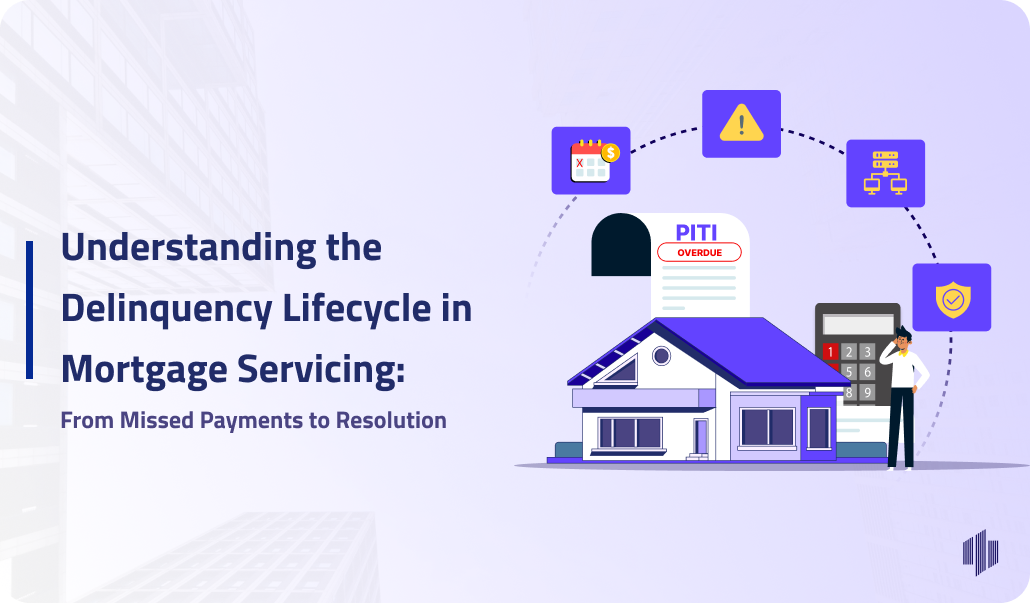
A borrower misses the monthly mortgage payment due to a busy schedule and realizes the payment was not made on time. Concerned about the late payment and potential late charges, the borrower needs a more reliable way to ensure future mortgage payments are made on time.
That’s where ACH Drafting comes in.
ACH Drafting allows a borrower to authorize the mortgage servicer to electronically draft the mortgage payment from a checking or savings account. Instead of manually preparing and mailing a check each month, the borrower can use a more convenient and automated payment process.
But what happens after the borrower authorizes the payment? To understand that let’s first look at what ACH Drafting is, the available payment options, why it matters, and how a payment moves from authorization through settlement.
What Is ACH Drafting?
In simple terms, ACH Drafting is an electronic way for a borrower to make a mortgage payment directly from a bank account.
The borrower gives the mortgage servicer permission to initiate the payment. Once the payment is set up, it can be processed electronically without relying on a mailed check.
Think of it as a connection between the:
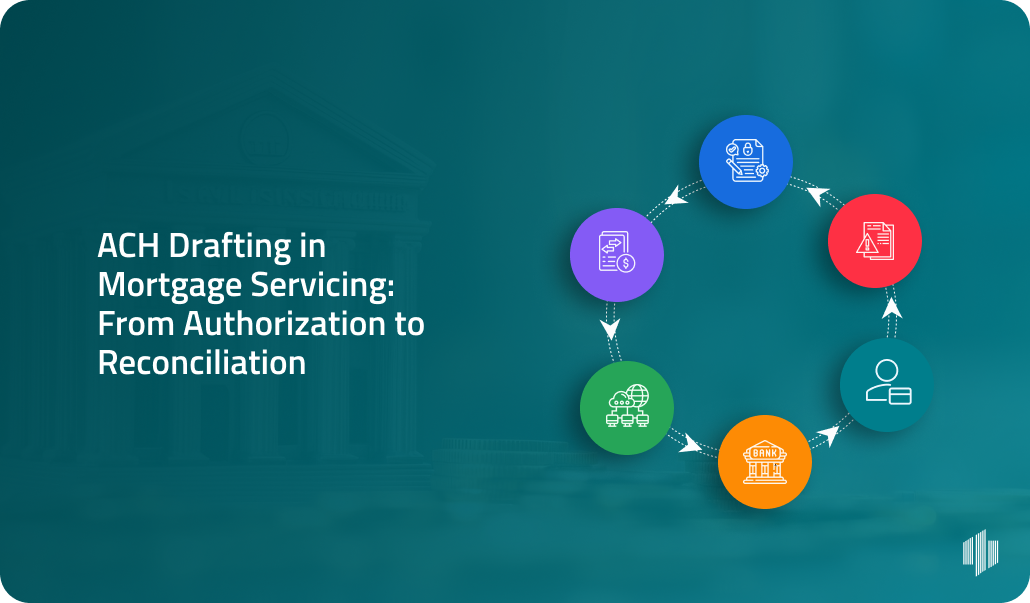
Borrower → Mortgage Servicer → ACH Network → Borrower’s Bank → Mortgage Account
Behind this seemingly simple connection is a structured payment process that moves the borrower’s authorization through the banking system and ultimately applies the payment to the mortgage account.
What Types of ACH Drafting Are Available?
Borrowers may have different preferences for making mortgage payments, so ACH Drafting can be set up in different ways..
1. Recurring ACH allows the mortgage payment to be drafted automatically on an established schedule. This is commonly used by borrowers who want their regular mortgage payment to be processed automatically without initiating a new payment each month.
2. One-Time ACH Draft allows the borrower to authorize a single mortgage payment for a selected date without enrolling in recurring payments.
Why Is ACH Drafting Important?
For borrowers, ACH Drafting reduces the manual effort involved in making mortgage payments. There is no need to prepare and mail a check each month, and there is less dependence on mail delivery. It can also help reduce late-payment risk and provide a more convenient way to manage payments.
For mortgage servicers, electronic payments support faster processing, reduced manual processing effort, improved payment handling, and more efficient reconciliation.
Now that we understand why ACH Drafting matters, let’s return to our borrower and follow what happens behind the payment.
ACH Drafting Lifecycle: From Authorization Through Settlement
After missing a payment, borrower decides to enrol in Recurring ACH Drafting so future mortgage payments can be handled more consistently.
Suppose the borrower’s monthly mortgage payment is $1,850.
1. Borrower Authorization
The process begins with authorization.
Before the mortgage servicer initiates an ACH debit, the borrower provides permission using an authorization method permitted for the transaction and the servicer’s process.
The borrower may also provide information such as the:
- Bank routing number
- Bank account number
- Account type
- Name on the account
- Bank name
Together with the payment amount and scheduled draft date, this information is used to establish the ACH payment instructions.
2. Payment Scheduling
Once the recurring arrangement is established, the servicer maintains the authorized payment schedule.
In our example, the borrower has authorized a $1,850 monthly mortgage payment. When the scheduled draft date approaches, the payment is prepared for initiation according to the established instructions.
3. ACH Initiation
The mortgage servicer, directly or through its payment-processing arrangements, initiates the ACH transaction.
The payment instruction enters the ACH process and is routed through the ACH Network toward the borrower’s financial institution.
4. Bank Processing
The borrower’s bank receives the ACH debit instruction and processes it against the designated account.
If sufficient funds are available and there are no other conditions preventing the transaction from being completed, the $1,850 debit can proceed through the payment process.
Not every transaction is successful. An ACH transaction may be returned for reasons such as:
- Insufficient funds
- Incorrect or invalid account information
- Closed account
- Stop-payment instructions
- Other applicable return conditions
When a return occurs, the mortgage servicer processes the returned transaction according to the applicable return reason, servicing procedures, and payment requirements.
For our example, assume the borrower has sufficient funds and the transaction processes successfully.
5. Mortgage Payment Posting
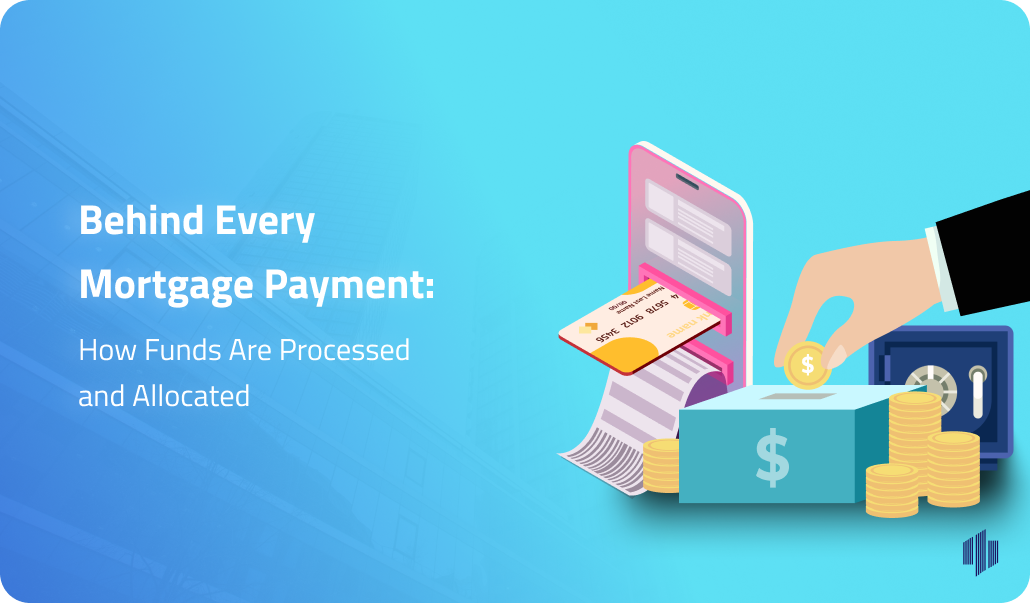
Once the payment is received and processed, the mortgage servicer applies the payment to the borrower’s mortgage account according to applicable servicing requirements.
From the borrower’s perspective, this is typically the most visible part of the process: a debit appears in the bank account, and the corresponding payment appears on the mortgage account.
6. Settlement
Behind the payment posting is the financial settlement process.
The financial institutions and ACH participants involved complete settlement of the transaction, allowing the funds associated with the ACH entry to move through the banking system.
Settlement is an important distinction: payment posting records the payment within the mortgage servicing environment, while settlement represents the financial movement of funds through the payment system.
7. Reconciliation
The process does not end when the payment is posted.
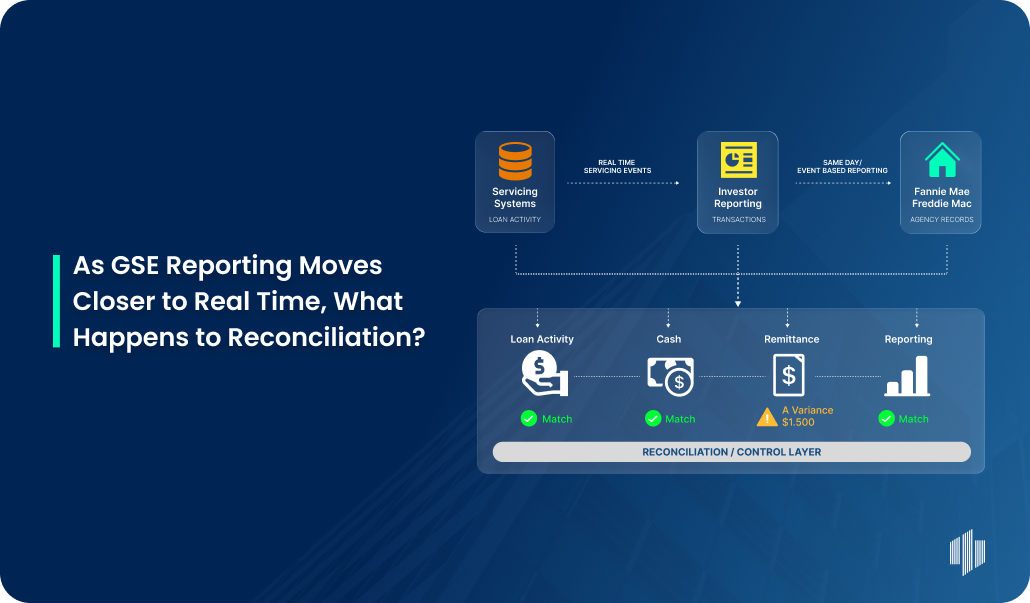
The mortgage servicer reconciles ACH payment information with servicing records, processor information, and applicable bank activity. Reconciliation helps confirm that transactions initiated and processed through the payment channel are appropriately reflected in the servicing and financial records.
This is also where differences, returns, posting issues, or other exceptions can be identified and investigated.
The complete lifecycle can therefore be viewed as:
Authorization → Scheduling → ACH Initiation → Bank Processing → Mortgage Posting → Settlement → Reconciliation
A More Structured Payment Experience
For our borrower, ACH Drafting provides a more convenient way to manage future mortgage payments after the missed payment that started our story.
The borrower sees a relatively simple experience: the authorized payment is drafted from the designated bank account and reflected on the mortgage account.
For the mortgage servicer, however, successful ACH Drafting depends on coordinated payment instructions, banking processes, mortgage posting, settlement, exception handling, and reconciliation.
Understanding this lifecycle helps connect the borrower’s payment experience with the operational processes that support it.
For the borrower, ACH Drafting offers convenience. For the servicer, it is a controlled payment lifecycle that connects authorization, processing, settlement, and reconciliation.


















![[List] 5 more best practices for custodial reconciliation](https://integradelivers.com/wp-content/uploads/2024/02/5-best-practices-in-custodial-reconciliation-part-2.png)