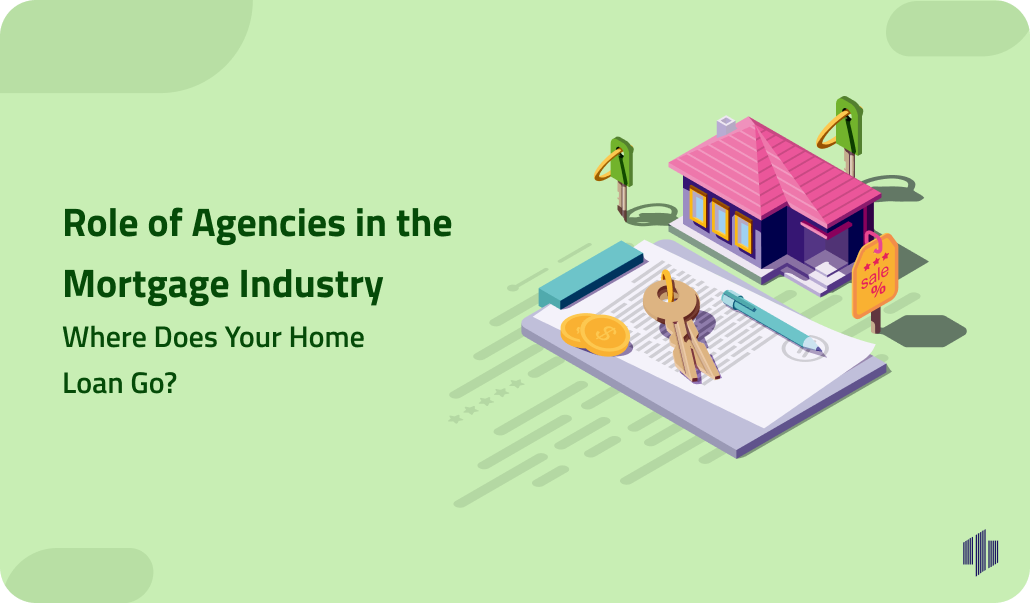
Buying your dream home is exciting—but for most of us, it also means taking on a mortgage loan. This usually involves turning to a bank or lender, pledging (or “mortgaging”) your house, and borrowing a large sum of money. At first glance, the process seems simple enough.
But wait—have you ever stopped to think:
- How do banks have so much money to lend?
- Where does your monthly principal and interest really flow?
- How secure is your mortgage, and what rights do you have as a borrower?
The answers aren’t as straightforward as they seem. Behind every home loan lies a complex system that keeps money moving safely and efficiently. Agencies like Fannie Mae, Freddie Mac, and Ginnie Mae play a huge role in making sure lenders have enough cash to keep lending while also protecting the broader housing market.
In this blog, I’ll take you behind the scenes to explore how the mortgage industry works, the players involved, and why understanding it matters for all of us.
Before going into deep there are three main names you’ll hear repeatedly:
- Fannie Mae (Federal National Mortgage Association)
- Freddie Mac (Federal Home Loan Mortgage Corporation)
- Ginnie Mae (Government National Mortgage Association)
At first, these might just sound like fancy acronyms. But here’s what they actually do in simple terms:
Role of Agencies in the Mortgage Industry :
1. Buys Loans from Lenders:
- After you take a mortgage loan from a big national bank, the bank will often sell this loan to agencies like Fannie Mae or Freddie Mac.
- This helps the bank maintain liquidity so it can continue lending to new borrowers instead of holding your loan for 30–40 years.
Example:
“Imagine you took a mortgage loan from a prestigious bank—do you think the bank will hold it until you repay after 30–40 years? Absolutely not. To maintain liquidity, the bank sells the loan to an agency, receives cash, and uses that cash to lend to other borrowers. The cycle keeps going. Now, your loan is in the hands of these agencies.”
2. Bundles Loans into MBS (Mortgage-Backed Securities):
- These agencies bundle thousands of loans together into Mortgage-Backed Securities (MBS).
- They sell these MBS to investors who want stable returns.
- Bundling spreads the risk, since not all borrowers will default at the same time.
Example:
“Imagine you are an investor. Instead of investing all your money in a single company’s stock (one loan), you invest in a mutual fund that holds shares of many different companies (an MBS made up of multiple loans). Why do this? Because diversification reduces risk. If one company performs poorly, the impact is cushioned by the performance of the other companies in the fund.”
3. Guarantees Payments:
- Agencies guarantee investors that they will continue to receive payments even if some homeowners miss their payments.
- This trust keeps money flowing and makes mortgages safer for everyone.
Example:
“Suppose you lose your job and miss a mortgage payment. Even then, the agency guarantees that the investor holding your MBS will still get paid. This trust is the reason investors continue to fund mortgages.”
4. Supports Affordable Housing:
- Unlike Fannie Mae and Freddie Mac, Ginnie Mae doesn’t buy or sell loans.
- Instead, it guarantees MBS made up of government-backed loans (FHA, VA, USDA).
- This guarantee protects investors, allowing lenders to keep offering affordable loan programs.
- As a result, first-time buyers, veterans, and low-income families can access better loan terms and achieve homeownership.
Example:
“Imagine you’re a veteran using a VA loan. Behind the scenes, Ginnie Mae acts like a shield, promising investors they’ll still receive payments. Because of this protection, your lender feels safe giving you the loan with better terms—like a lower down payment or easier approval.”
5. Stabilizes the Housing Market:
- During times of financial stress, agencies ensure lenders don’t run out of money.
- Without them, mortgage lending could freeze, making it much harder for families to buy homes.
Example:
“In times of crisis (like the pandemic), these agencies step in to keep the mortgage market alive. This ensures banks still have funds to lend and families can still purchase homes.”
Why Does This Matter to You?
- Without agencies, banks might run out of cash quickly and stop lending or act more cautiously.
- With agencies, the cycle keeps going—you, your neighbour, and millions of others can access mortgage loans more easily.
- Most importantly, they add a layer of security and stability to the system that directly impacts your ability to buy and keep your dream home.
References:
- Fannie Mae – About Us
https://www.fanniemae.com/about
- Freddie Mac – About Us
https://www.freddiemac.com/about
- Ginnie Mae – What We Do
https://www.ginniemae.gov/what-we-do
- U.S. Department of Housing and Urban Development (HUD) – FHA Programs
https://www.hud.gov/program_offices/housing/fhahistory
- Securities and Exchange Commission (SEC) – Mortgage-Backed Securities
https://www.sec.gov/answers/mortgagesecurities.html












![[List] 5 more best practices for custodial reconciliation](https://integradelivers.com/wp-content/uploads/2024/02/5-best-practices-in-custodial-reconciliation-part-2.png)
![[List] 5 best practices in custodial reconciliation](https://integradelivers.com/wp-content/uploads/2024/02/5-best-practices-in-custodial-reconciliation.png)