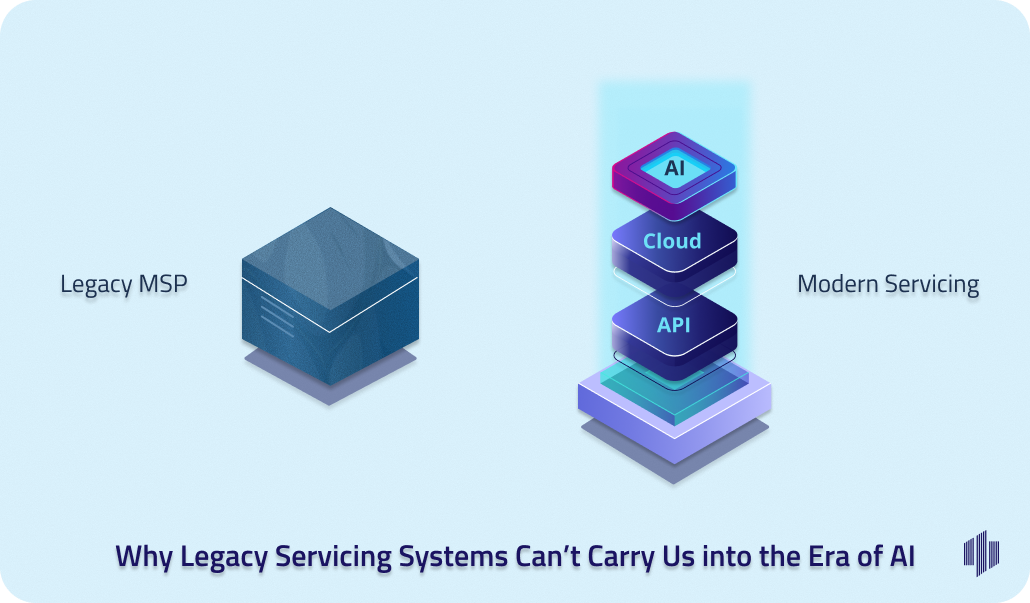
Mortgage Tech: Why Legacy Servicing Systems Can’t Carry Us into the Era of AI 

For more than two decades, mortgage servicers have relied on legacy platforms that were built for a different era—an era defined by static borrower expectations, limited regulatory oversight, and slow technological change. Those days are gone. 

Today, the servicing landscape is more complex and more demanding than at any time in its history. Regulatory scrutiny is intensifying, borrower expectations are rising, digital ecosystems are expanding, and margins are tightening. The systems that once anchored our operations are now the very systems holding us back. 

It should be no surprise, then, that among financial institutions, the legacy modernization market is projected to reach approximately $56.9 billion by 2030 (about a 17.9% CAGR). And the specific market for mortgage servicing platforms (MSPs) was expected to hit $5.5 billion this year, highlighting the increased demand for modern MSPs. The question is no longer if servicers should modernize, but how quickly they can afford to do so.  

The Innovation Gap in Mortgage Servicing 

Legacy servicing systems were never designed for real-time data access, seamless integrations, or automation-driven operations. These systems were many times built as point solutions that no one expected to be around three decades later. Over time, we’ve layered customizations, workarounds, and bolt-on tools on top of them—each one adding complexity, cost, and operational risk. 

Meanwhile, servicing demands have accelerated dramatically: 

  • Regulators expect immediate transparency. Auditability isn’t optional; it’s foundational. And current regulations require real-time or near-real-time access to servicing data.  
  • Borrowers expect digital clarity. Real-time escrow updates, instant communication, and intuitive self-service are baseline expectations.  
  • Data volumes have multiplied. The ability to manage, interpret, and act on that data is now a competitive differentiator. 
  • Workforces require tools that empower. Teams cannot be burdened by manual processes and fractured workflows. 
  • M&A activity is reshaping servicing operations. Consolidation and MSR acquisitions require platforms that can scale quickly, onboard portfolios seamlessly, and integrate disparate systems without prolonged disruption. Legacy platforms were never built for frequent integrations or portfolio expansion at speed. 
  • AI adoption is accelerating operational expectations. Modern AI capabilities—ranging from automated exception resolution and document classification to predictive borrower analytics and conversational servicing—depend on clean data, real-time connectivity, and flexible architecture. Legacy systems limit AI’s potential, forcing servicers to rely on disconnected tools rather than enterprise-wide intelligence. 

The gap between what legacy systems can deliver and what modern servicing requires is widening with every month. Consider recent data from the Software Improvement Group: Approximately 37% of legacy systems earned a “below average architecture rating.”  

Why Modernization Is Now a Strategic Imperative 

Modern servicing platforms do more than replace outdated technology—they reshape the operating model of a servicing organization. 

1. Data Becomes an Asset, Not a Limitation.

Cloud-native, API-driven systems make data accessible, usable, and actionable. Servicers gain real-time insights for risk management, investor reporting, and operational decision-making. 

2. Automation Eliminates the “Exception Culture.” 

Modern architectures support AI-driven exception management, automated QC/QA, and intelligent workflows across escrow, loss mitigation, payment processing, and customer service. 

3. Compliance Moves From Reactive to Embedded.

Instead of scrambling to interpret rule changes or respond to audits, modern systems embed regulatory logic and rule-based workflows directly into the platform. Compliance becomes proactive rather than reactive. 

4. Borrower Experience Transforms Servicer Reputation.

When borrowers can self-serve, understand their escrow, and receive help quickly, customer satisfaction rises—and so does investor confidence. 

5. Scalability Supports Growth and MSR Strategy.

Modern platforms support portfolio expansion, subservicing models, MSR acquisitions, and rapid integration after M&A—without breaking the operational backbone. 

The Real Barrier: Change, Not Technology 

The technology to modernize servicing is ready. The real challenge—and often the real cost—lies in managing the organizational, operational, and cultural shifts required to adopt it. Servicing platforms sit at the center of every function, from payment processing and escrow to customer service, loss mitigation, and investor reporting. Replacing them touches nearly every policy, every team, and every exception path that has evolved over years. 

But modernization doesn’t have to be disruptive. The servicers who manage this transition best do so by treating the migration not as a massive “big bang” project, but as a disciplined transformation program with clear guardrails. Several strategies consistently help control cost, reduce complexity, and protect operational stability: 

1. Rationalize Before You Migrate.

Servicers accumulate a long tail of customizations, shadow systems, and manual scripts—many of them outdated or unnecessary. High-performing organizations simplify before they migrate to avoid dragging technical debt into a modern environment. 

2. Prioritize a “Core First” Approach.

Trying to replicate every legacy workflow inflates timelines. Successful servicers focus first on the core: 

  • Fundamental servicing operations 
  • Investor-critical requirements 
  • Compliance must-haves 

Then they layer enhancements once stability is established. 

3. Build a Dedicated Migration Governance Team. 

Modernization fails when it’s treated solely as an IT project. Cross-functional governance, clear ownership, structured decision-making, and disciplined change control turn a high-risk project into an executable plan. 

4. Use Iterative Data Conversion.

Multiple trial conversions improve data quality and reveal hidden issues early. By go-live, teams have validated outputs repeatedly—turning the final cutover into a predictable exercise rather than a risk event. 

5. Train for Adoption, Not Just Functionality.

The biggest source of disruption is people not feeling ready. Scenario-based training, role-specific workflows, and internal “change champions” dramatically reduce exceptions and lift performance. 

6. Manage Parallel Operations with Precision.

When old and new systems run together, clarity is critical. Strict definitions of ownership, tight reconciliation loops, and temporary automation reduce dual-entry errors and borrower confusion. 

7. Treat Modernization as a Multi-Year Evolution.

Go-live isn’t the finish line—it’s the beginning. Organizations that plan for continuous optimization spread cost over time and steadily increase value through automation, AI integration, and workflow refinement. 

Ultimately, the barrier to modernization isn’t that it’s too big—it’s that too many organizations try to solve everything at once. With the right governance, sequencing, and leadership, modernization becomes not a risk to mitigate, but an opportunity to redefine how servicing operates. 

The Future of Servicing Belongs to the Modernized 

The servicing companies that thrive over the next decade will be those that treat modernization as a business strategy, not an IT initiative. They will be the ones who: 

  • Use data to anticipate borrower needs 
  • Automate to eliminate friction 
  • Build compliance into every workflow 
  • Integrate effortlessly with partners and investors 
  • Adapt quickly to whatever the market demands next 

Mortgage servicing is evolving, and the industry leaders of tomorrow will be defined by their willingness to break from the constraints of yesterday. The organizations that act now will not only improve operational resilience; they will set the standard for the future of our industry. 
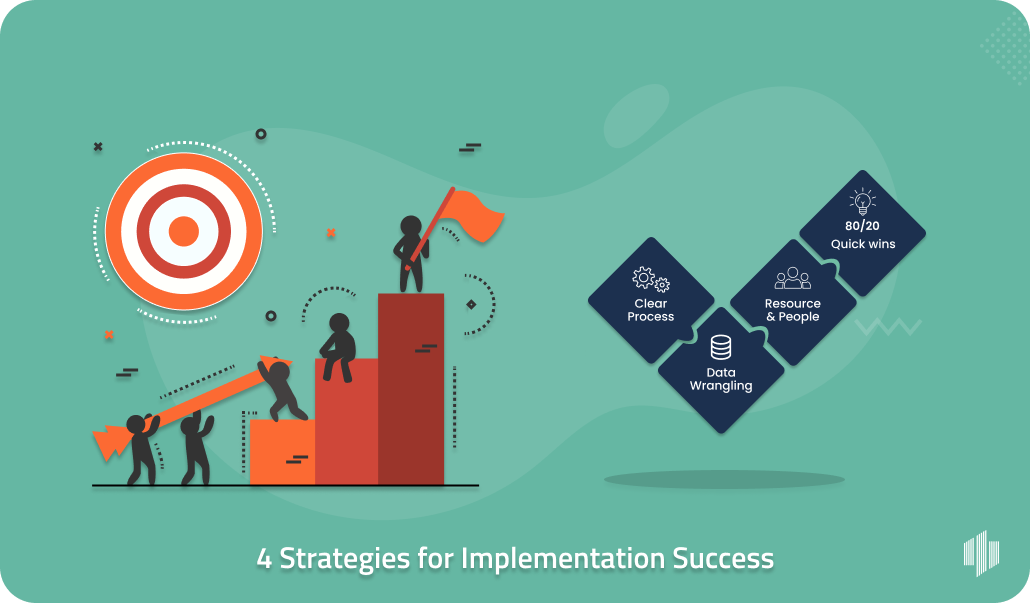
Winning the Race to Go-Live: 4 Tips to Prepare You for Success

We’ve all heard (and possibly experienced) the tropes about failed tech projects. The main culprits are often easy to identify but tough to avoid.  

In a recent BCG survey, business leaders identified three primary reasons for delays and failure:  

  • Lack of clarity or alignment on business outcomes 
  • Lack of realistic timelines 
  • Lack of resources fully dedicated to the program 

With the right approach, your implementation team can avoid these pitfalls. Check out these four winning strategies to kick off on the right foot–and win the race to successful implementation.

#1. Rethink the target process.

The biggest mistakes come from the wrong mindset. If your team is simply looking to do the same thing but faster, it may result in short-term success but also a missed opportunity in the long term. This is the time to transform the business process to capitalize on new capabilities. 

Woman in flying machine with wings and hot air balloon

Take our friend in the image above, from 1870. The author conceived of a flying machine, using birds as the functional model. This invention doesn’t improve flight. Instead, it’s a good example of the same-thing-but-faster mindset, limited by what was available back then.   

Below are some tips to rethink the target process in the context of achieving true transformation:  

  • Map the current process as it really is. This might seem like a tedious step, but it often illuminates redundancies and workarounds that can be eliminated in the new process. Listen to the people who complete the relevant business processes each day–executive sponsors’ process maps usually document how a process “should” go, but don’t include all the workarounds, dead ends, or shortcuts in the real-life business process.  Try to uncover these early! 
  • Align the “to-be” process with desired results. We often find that clients are initially rigid in their concept of what they need, and that they may not be open to another solution—even a ready-made one. Instead of focusing on what you think the new process should look like, focus on the results you’re looking for (e.g., greater efficiency, better visibility, or better accuracy). Your technology partner can then help you map a “to-be” process that fulfills those goals.  This all starts with having a clear picture of the outcome. 
  • Prioritize customizations and enhancements. No technology solution will 100% fit your organization’s unique business process right out of the box. But every new option you request doesn’t need to be available from Day 1. Decide which new features are truly required to complete your business process, and which are “nice to have” enhancements. Your technology partner can create a roadmap that includes all these changes, so you have an approximate timeline for deployment.  It is best to discuss these early to avoid any retrofitting in the future. 

#2. Wrangle your data.

Cowboy on a horse chasing an ostrich

We’ll stick with the 1870’s and consider this cowboy wrangling an ostrich. This isn’t so different from mortgage servicers trying to get a firm grasp on their data!

Every mortgage servicing operation is awash with data: from MSP reports, bank statements, and wire reports, to Snowflake, BDE, and even spreadsheets, the list of potential data sources can seem endless. It’s no wonder, then, that data—or really, lack thereof—often presents a considerable roadblock to successful implementation.  

  • Understand what data you need—and where it all comes from. During one implementation, we discovered that several important data points weren’t included in the data warehouse as expected, so we had to supplement with raw MSP reports. Audit your data to ensure that it all “comes from” the expected source; that it’s complete; and that it’s available when you need it (e.g., daily or monthly).  Getting the full picture early saves time. 
  • Consider data requirements for downstream processes. For example, we often see that Investor Reporting handles all the wires—and then Investor Accounting needs the related loan-level information. Understanding these requirements can help ensure that you don’t “break” any of your data flows during implementation. It can also help you identify opportunities to improve data flow.  For instance, the ability to produce accounting entries as part of our subservicing billing solution came from a request in mortgage accounting, a separate group from our immediate project partners in the operation.  
  • Identify all data “owners.” You’ll need a full picture of your organization’s data ecosystem. Usually, different individuals or teams oversee data security and/or transmission, while others understand the operational context of the servicing data you’re using. You’ll need expertise and input from all of them, even if they won’t be intimately involved in every step of the implementation.  This information is critical for assigning notifications and other workflows to fix any data discrepancies as these are discovered during automation. 
  • Consider any “to be” changes. Will you be using the same data sources for the long term? If there’s a change coming soon (such as changing servicing systems), it may be better to navigate that transition before implementing a new, dependent software system. The answer may not be very clear at this stage.  However, it is important to envision a process to manage any changes to data sources along with a governance plan.  

#3. Dedicate the right resources.

Every member has their own super powers (and version of kryptonite!) Ultimately your people will make or break your implementation efforts. And it’s not just about getting the “right” people, it’s also about ensuring these people have the capacity—and mindset—for the implementation.  

  • Keep your team tight! A team with too few people won’t have adequate time or organizational reach. An overly inclusive team often gets bogged down in minutia. The most effective teams include only engaged, active decision makers and direct stakeholders who understand the strategic and tactical implications of the relevant business processes (and, of course, a stellar project manager!).  The greater team will remain informed, but the core team should remain small and nimble. 
  • Consider the team’s workload. An implementation most acutely affects your super users, who will often be responsible for running parallel processes—they’ll essentially be doing everything twice, for a while. Ensure that these resources aren’t also assigned to other projects or initiatives. In our experience, the most successful (and fastest) implementations are those where at least a few super users are solely dedicated to the implementation and the “to-be” business process.  Fractional schedules where executives dedicate certain hours each month work well.  However, not making effective use of this time (or overextending the commitment) will ultimately lead to lost productivity.   
  • Identify your early adopters. Let’s be real: some employees are going to more resistant to change than others. Avoid putting them on your implementation team and bring them back when the process is more settled. Instead, look for people who have demonstrated fluency in your existing technology, along with eagerness to learn new things and expand their skill set. Ideally, this person will also be a trusted leader (even informally) who can nudge others toward adoption. The excitement will quickly flourish from within. 

#4. Focus on quick wins.

As you plan your implementation, look for opportunities for quick wins. These help bolster your implementation team’s confidence and provide immediate proof of concept to end users. It also gets people into a rhythm of using a new system or running a new process.  This will make introducing bigger changes related to the implementation much easier. 

  • Use the good old Pareto principle. The 80/20 rule consistently plays a starring role in our successful billing implementations. Clients often find, for example, that the majority of their bills fit into the same format (e.g., similar billing lines or remittance packages), so we tackle those first.  These details are typically discussed during Discovery or before. 
  • Start with the easy stuff first. When it comes to implementing the recon system, we almost always start with T&I cashbook and custodial reconciliations. Starting with the least complex elements will give your team the experience and confidence to take on the more complicated scenarios associated with P&I A/A. P&I S/S are usually last since they’re the most complicated and generally comprise the smallest number of recons.  Again, circumstances and priorities will always play a role in how best to plan the implementation. 
  • Go for the biggest time savers. We often find that our clients spend hundreds of hours each month on a single manual process that we can easily automate. In this case, we often tackle that process first, to demonstrate meaningful time savings right away—especially important when your implementation team is still running parallel processes.  

Bonus: Remember, you’re racing toward adoption.

Your work doesn’t end when your new software is up and running. Remember that an implementation is ultimately about adoption—people using that software. The most successful implementations are those where the team focuses on adoption from the very beginning.  

  • Plan engagement with your broader team. Decide when you’ll start transitioning the entire team to using the new software. The implementation need not be complete for this to happen. For example, once we’ve set up the T&I cashbook, end users can get comfortable working those reconciliations in the system while the implementation team moves on to more complicated scenarios.   
  • Communicate early and often. Suprises are great for parties. Not so much at work. The more often you communicate with end users and other stakeholders, the more likely you are to get their cooperation. From the very beginning, explain the relevance of the new technology and how it will improve operations or make people’s jobs easier. It can also be useful to show proof of concept, such as demonstrating a simple reconciliation in the new system.  
  • Create training materials and SOPs as you go. We often find that Super Users will use our standard training materials as a starting point, then tailor them for their organization’s idiosyncrasies. These will give you a jumpstart later, when it’s time to create more formal training materials.  

What are some implementation challenges you faced recently in your organization?  What would you say was the biggest contributor in getting it back on track (or changing directions)? 

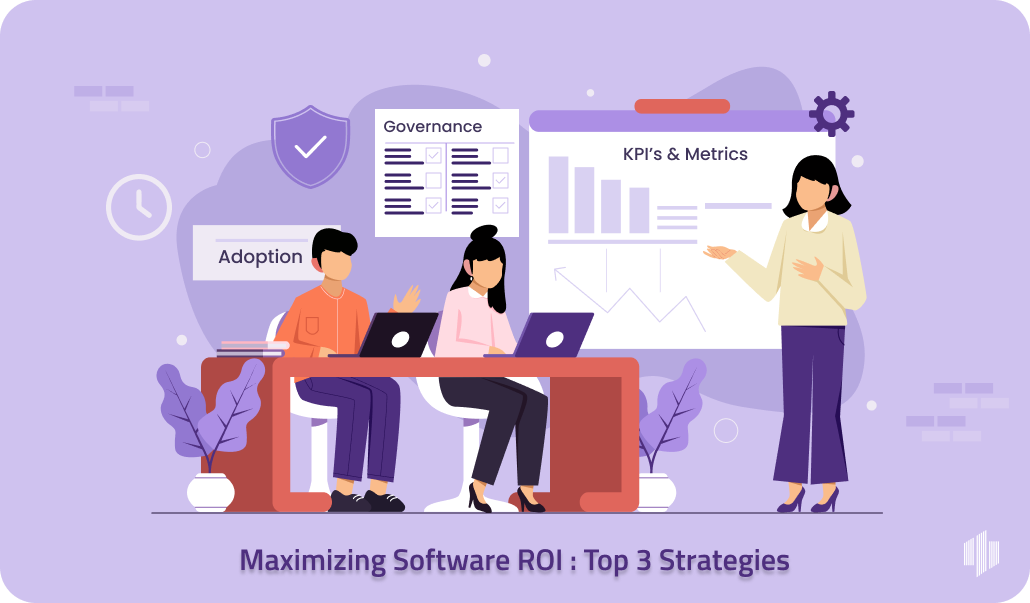
Maximizing Software ROI: Top 3 Strategies for Successful User Adoption

Consider this scenario: Your organization just invested thousands of dollars—and hours—on a major software implementation. But you’re still not seeing the efficiency and accuracy improvements you were expecting.  

As you explore the root of the issue, you discover that your team is using the software  to manage recon outages, but they’re still tracking outage owners and expected clear dates in a separate, off-system spreadsheet—a much more tedious process than using the new software for the same purpose.   

You dig deeper and learn that their training didn’t cover that functionality. The team simply kept their same old procedure, unaware that they could automate these components of the process.  

Unfortunately this isn’t an uncommon problem with implementations. A truly successful implementation doesn’t end when the software is up and running; it ends when the end users have competently, confidently adopted the software.  

Failure to Adopt Has Strategic Consequences 

It’s easy to ignore adoption if it’s not integrated in the implementation process. But failing to ensure adoption has short- and long-term consequences for your organization:  

1. Unrealized ROI: This is perhaps the most obvious and immediate impact of a failed adoption. Your organization has invested money, time, and resources in new technology, and now you’re paying for something that no one is using. Furthermore, you’re not gaining the efficiency and savings that should have come with that investment.   

2. Hidden training and support costs: If adoption isn’t baked into implementation, the burden of training and support often fall to the wrong people—namely managers, team leaders, and the IT department. They can quickly get bogged down with redundant, avoidable questions and issues, all of which distract from their primary responsibilities.  

3. Bloated processes: New software should streamline processes. But if your team doesn’t fully adopt that software, they’ll develop workarounds and processing exceptions that bloat SOPs—further complicating training.  

4. Drop in employee morale and attitude: As employees feel defeated or overwhelmed by new software and processes, their morale suffers. This directly correlates with decreases in productivity.  

    5. Elevated risk for compliance violations: When users skip steps or work outside the system of record, your organization can be at risk for expensive compliance violations or audit findings.  

      6. Impaired decision-making capabilities: Most technology adoptions come with the promise of improved insights and data analytics. Without this information, your organization’s leaders lack the comprehensive information they need to make strategic decisions.  

      7. Detours on your organizational roadmap: Lags in adoption not only cost money, but they also ultimately hinder your organization’s digital transformation. Each time an initiative fails to launch, teams lose confidence, roadmaps slip, and eventually your entire strategic vision gets derailed.  

      Although there’s no foolproof method for ensuring a successful adoption, there are several principles that will increase your chances for success.  

      #1. Address process governance, not just process management.  

      In our experience, the most successful adoptions are those where the organization embraces not just process management, but true process governance. What’s the difference?  

      Process management is essentially tactical, ensuring that individuals follow the correct process. Generally supervisors or team leads handle process management, and they may not have complete insight into how their updated business processes impact other upstream or downstream business processes.  

      Process governance, on the other hand, is more strategic, with multiple goals: 

      • Ensuring that new processes align with overall business goals 
      • Fulfilling all relevant regulatory or operational requirements (especially important in mortgage servicing) 
      • Implementing the new process correctly and consistently across all impacted business teams 

      The ideal process governance structure is usually federated: individual teams have autonomy over process management and provide input, but a single team or leader is responsible for overall governance structure.  

      While it may require more time during the initial phases of implementation, establishing a robust process governance framework better ensures proper adoption. Here’s a (non-exhaustive) list of some key elements:  

      • Clearly defined roles and responsibilities: The most effective implementation teams fully understand what they “own” in the process. Your process governance plan should clearly outline who’s involved when, and what their responsibilities are. 
      • Detailed SOPs for the current and “to-be” processes: We frequently find that employees have developed their own—often undocumented–workarounds or shortcuts for current processes. It’s critical to understand these, and to document what the new process should look like.  
      • Thoughtful communication strategy: The best communication plans use the mantra of “Early and often.” Start before the implementation is too far along, and consistently communicate the business objectives of the new process. Tailor the messages for different stakeholders; end users will have different concerns and goals than senior leadership, for example.  
      • Relevant KPIs and metric tracking: It’s critical to define the success of any project, and a technology adoption is certainly no exception. Frequent benchmarking allows you to identify pitfalls or challenges as early as possible. More about setting KPIs below!  

      #2. Track the right KPIs and metrics.  

      As a business leader, you’re probably laser focused on the ROI of any technology adoption. And you should be! Often we see business leaders who are hyper-focused on the numbers that come at the end of a successful adoption (such as reduced headcount or decreased costs). While those numbers are certainly important, they don’t provide the insights you need in the interim.  

      Since we’re talking numbers, here are a few eye-opening stats: According to the Technology Service Industry Association (TSIA), 70% of software features don’t get used by customers. And the Whatfix 2024 Digital Adoption Trends Report concluded that 78% of employees lack expertise and knowledge of the software they use daily, and could use more training.  

      So when it comes to adoption, which numbers matter? Focus on the KPIs and metrics that demonstrate true user value:  

      • Workflow completion rates: This is usually defined as the percentage of employees who are using the new technology to complete the relevant work, rather than the old process.  
      • Time-to-task accuracy: How long does it take employees to do their tasks accurately and error-free using the new technology? This figure should decrease as employees gain more fluency with the new process.  
      • Support ticket volume: It’s natural for users to submit a higher volume of support tickets for a new technology. But if support ticket volume remains static over time, it usually indicates that users need additional training or other support.  
      • Use of workarounds and shadow tools: This can be more difficult to measure, but it’s important to work with your team leaders to track this behavior. 
      • Time to proficiency: How long does it take a new user or employee to gain fluency with the new process, as indicated by independent completion of the business process?  
      • Process cycle time: How long does it take to complete the end-to-end business process? Shorter cycles indicate improved efficiency. 
      • Employee productivity rate: How productive is each individual employee, as measured by their tasks completed each day (e.g., number of reconciliations submitted per day)?  
      • Organizational productivity rate: How productive is each team, as measured by tasks performed each day? These gains indicate improved organizational efficiency. 
      • Error rate: How often do employees make errors or require assistance to complete their work? High error/intervention rate often means more training is necessary.   

      Skip the vanity metrics here! The number of active users or total clicks is hardly indicative of how users are really using the new technology. For instance, high total clicks could actually demonstrate that users don’t know how to use the new system and spend lots of time clicking around, looking for the right things.  

      #3. Plan for adoption after the implementation ends.  

      So the implementation is over. That means it’s time to move on to the next project, right? Not so fast! While the “main” adoption might be over, adoption efforts must continue.  Consider these three common scenarios:  

      • New employees join the team: Who is responsible for training new employees to use this technology? What does that training look like? Which KPIs will be used to determine when a new employee has achieved proficiency? And who is responsible for updating training materials as processes change or new features are introduced? All of these answers should be documented before you close out the implementation.  
      • Business processes evolve: Perhaps your organization acquires a new set of loans, and now you must meet a different set of agency requirements. Your vendor can add the necessary configuration, but your end users will still need to understand and use the new functionality. Or you identify another downstream business process that could be automated using this same technology. A new team will need to start from scratch to learn a new process. In both these situations, existing training materials will be a starting point, but they’ll need to be supplemented using a new adoption plan.  
      • The vendor releases new features: As technology partners, we work closely with our clients to determine which new features will add real value. We also provide how-to guides and walkthroughs to introduce new functionality to superusers and business team leaders. Our efforts can only go so far, and we need our clients to champion the adoption of new product features so they can achieve the desired value and results.  

      Address these scenarios during your implementation, ideally as part of your overall process governance. This will ensure smoother transitions for new employees, greater operational efficiency when processes change, and increased adoption of new features that can improve value.